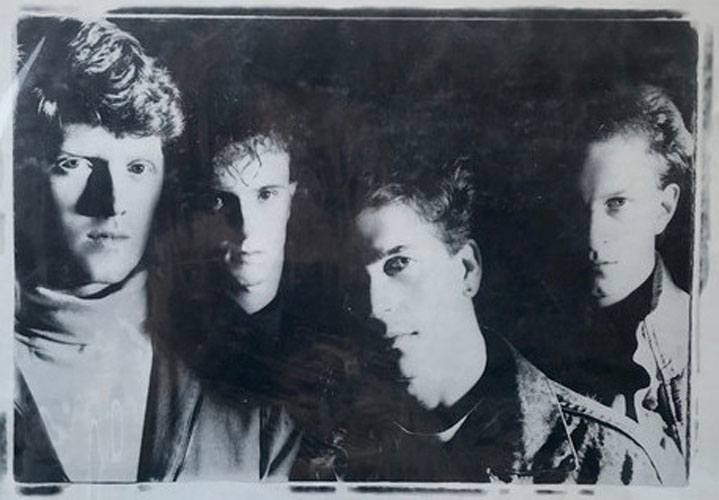
Pulling from the same musical aesthetic as their previous band Xotics, which had just split, singer/guitarist Todd Carrie and singer/keyboardist Brett Curtin formed Radio Architecture with young Chicago transplant Kevin Crosslin, a programmer and keyboardist with a studio where the band wrote, produced and recorded.
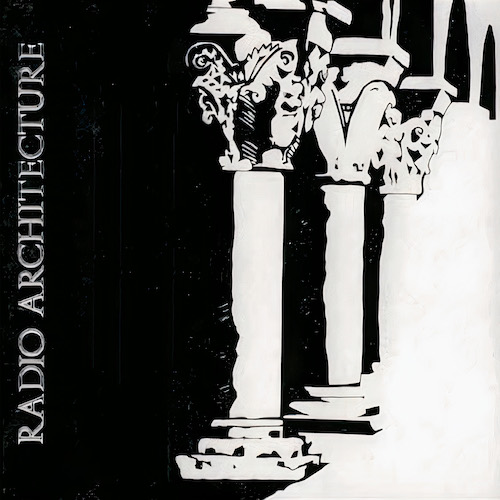
The Scottsdale, Arizona-based band first cut five songs built around computer programming, synths and drum machines, releasing them only as a self-titled cassette. It showed a band baking pop into techno, vocals mixing blue-eyed soul with sweet croons and lovely, sometimes mournful harmonies. It worked.
Program director and DJ John “Johnny D” Dixon added “Perfect Stranger” to regular rotation on Phoenix’s mighty KEYX-FM, upping the band’s local presence tenfold. The dancefloor-ready gem’s huge chorus was inescapable, could’ve slid nicely onto the Pretty in Pink soundtrack.
Live shows saw them using projections against a white sheet behind them, images and textures moving across faces and surfaces. They looked closer to dapper boy-band pin-ups than a group navigating some sweaty desert-city underground.
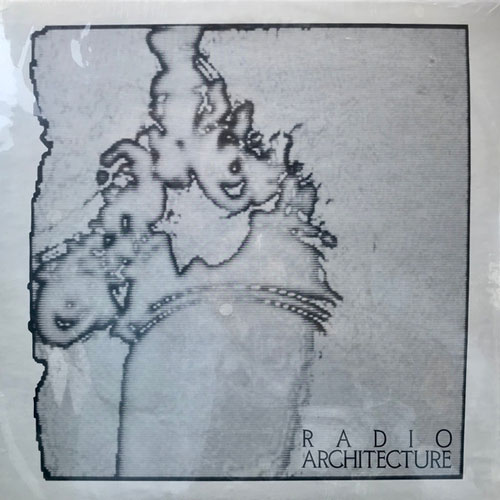
Drummer Todd Jewell from Xotics joined after the EP release. Carrie picked up the guitar again. They sounded more like a live band now, endlessly curious and quickly evolving. They wrote and recorded the eight-song LP To Have or to Be in ’87, releasing it the next year.
Taking its name from psychoanalyst Erich Fromm’s book about human duality, the album handily transcends any mundanity suggested by the title. There are sitars and congas on the George Harrison-y “Go Where the Rain Goes,” tinges of mamba on “Stay,” and straight electro-pop on “Works That Way for Me.” Both “Watch This World” and “Be Somebody” lift on booming bevies of hooks—guitars, keyboards, vocals, drums—and each is a perfectly crafted pop song. No joke. They should’ve been hits, in this world or any other. But life is unfair.
The band said in an interview from the ’80s they were keen “to eliminate” that which “wasn’t absolutely necessary.” Sure, there was some Kraftwerkian modernist reductionism going on, eschewing musical noodling without slipping into sterility. Listening now, all the band was really doing was creating timeless pop, ahead of its time not just in Phoenix, but anywhere. More than that, the loss-of-innocence earnestness and unironic lyrics detailed various routes to the heart, a place where real change could happen. Thoughtful kids. Decades later, Carrie explains, “We were always into the darkwave instead of the new wave, more intellectual … Not because we wanted to be cool rock stars, but because the music moved us.”
A bunch of bad decisions accumulated and the more attention they got, the more the band became untenable. Carrie says he became untenable—eventually voted out of his own band. The others trudged on a few more months. By the end of ’88, Radio Architecture was done.
– Liner notes by Brian Jabas Smith