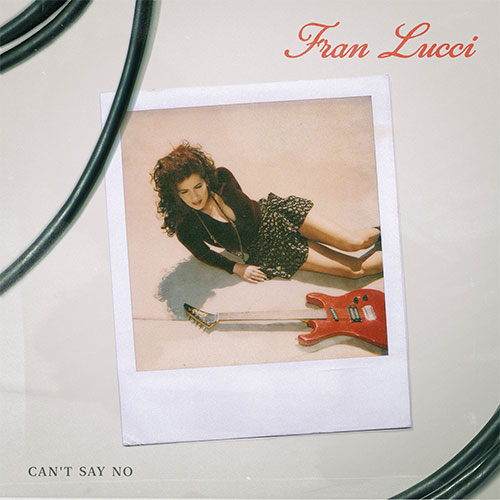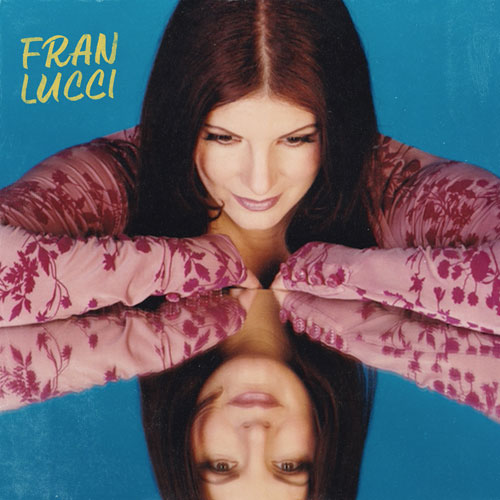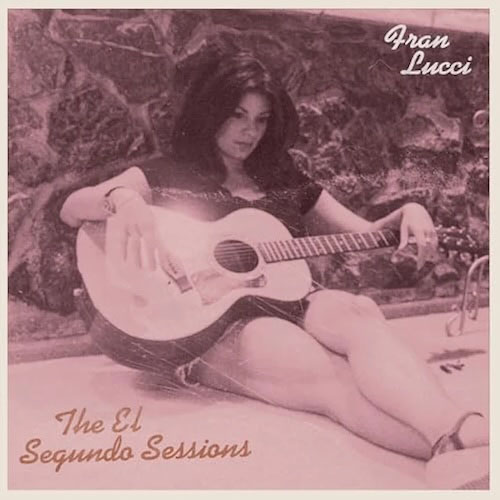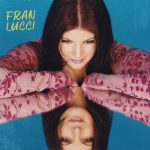
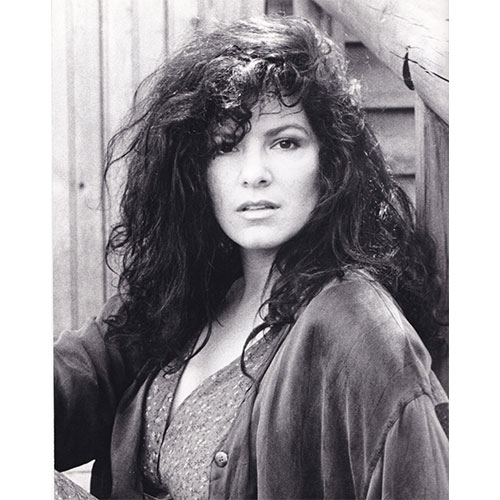
Fran Lucci’s phone voice carries warmth, its tone and word choices welcoming and believable. As many of her songs illuminate, that same voice effortlessly transmits the tug-of-war between desire and love, between reality and hope. Many bend toward the rootsy, all informed by rock ’n’ roll.
There’s pop, country, folk too, sometimes at once. The occasional gentle piano balladry bears Brill Building DNA. It’s a handsome blend.
Cherry Hill, New Jersey-raised Lucci grew up mostly on rock and Top 40 radio, which likely informs the pop turns in her songwriting. From the Beatles and Springsteen to Bonnie Raitt and Tori Amos.
Perhaps that’s no surprise. Her parents were teenagers when she was born, so, as Lucci puts it, she “grew up” with them. “By the time they were 29 they had five children.”
She picked up the guitar at nine, when a neighbor who’d sit on her porch and play songs taught Lucci her first chords. Soon she taught herself piano on an ancient upright “that my Mom painted white.” She wrote her first song at 10. “I wasn’t an old soul like Joni Mitchell. I didn’t get good at lyrics and melody till I was in my mid 20s.”
In her junior year at Penn State, a musical theatre major, she bailed in the dead of winter—L.A.-bound to sing and write songs. She worked in film production accounting, essentially to finance her music. “I worked so I could record. Sometimes they’d find out I was a singer/songwriter.”
The arrangement turned surreal. While handling production finances on Ann-Margret’s 1994 film Following Her Heart, Lucci also wrote the theme song and landed a bit part.
Some in Hollywood christened her “the singing accountant.” It became a career motif. She landed three songs, played a small singer-songwriter role while doing accounting on 1993’s Kiss of a Killer. “Also, I got one of my songs in a movie called “Out of Darkness” starring Diana Ross. I was the production accountant ‘by day’ on that one as well. “Love Potion No. 9” starring Sandra Bullock was another one.”
She later married and had a daughter “so I had to take staff [accounting] jobs.”
Balancing dry, numerical precision with music’s emotional exploration echoes what poet Vladimir Mayakovsky had in mind when he wrote “Conversation With the Taxman About Poetry.”
How did Lucci reconcile accounting with songwriting? “I suffered from imposter syndrome on both the accounting and songwriter side,” she laughs. “So I worked twice as hard on both!”
In the meantime, after releasing an album and touring Europe as lead singer/songwriter with the Holograms, she began recording under her own name.
Didn’t hurt that the Lilith Fair Unsigned Artist contest made her a finalist. Or that Jennifer Love Hewitt covered one of her songs. Didn’t hurt, either, that in ’96 legendary producer Phil Ramone (Sinatra, Madonna, Billy Joel, Stevie Wonder) took Lucci under his wing for a short-lived label venture. Ramone worked with her at his Connecticut home studio and at the storied Capitol Tower in Hollywood. (Fervor Records has released a selection of Lucci’s ’90s and 2000s recordings, including two Ramone-produced chestnuts, among them the glowing pop ballad “Temporary Sanity.” Her songs have re-flowered in film and TV placements.)
Her recordings boast a honeyed studio luster – well-produced yet loose and organic, laid-back, deceptively introspective and, at times, angry.
Her voice shows hints of the salty purity of Bonnie Raitt, or even early Sheryl Crow.
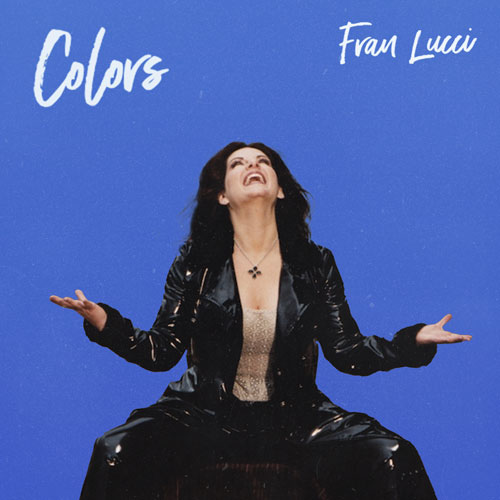
Sweet nostalgia swells like the Santa Monica sunset on “Precious Days.” On “Secrets,” a pulsating drum loop, slide-guitar hook and an unguarded chorus tell of a duplicitous lover wrestling with gnawing pain, while the irresistible “Colors” slow-burns through longing, cleverly flipping the gender on the Stones line “She Come in Colors” for the jangle-joy, Bangles-y chorus and “Oh So Psycho” gets straight to an insanity-driven desire on a bed of heavy strutting guitars, Alanis Morissette-style.
Lucci continues to write. She always will. With no accounting ledgers in sight, it’s about pleasure, craft and recording. “I’ve been writing some country, more Americana,” she says. New open tunings rekindled her love of the guitar.
To hear her warm voice in person, away from streaming, look for her at a songwriter’s round with friends somewhere out in wine country.
– Liner notes by Brian Jabas Smith