John Kontol’s first rock ’n’ roll concert was Chicago, and the sheer sonic momentum blew his teen mind—the soaring horns, the vocal-guitar-keyboard velocity, all of it. Pure musical beauty. “I thought I was in heaven,” says the smooth-voiced multi-instrumentalist, who grew up in tiny Whiting, Indiana, 30 minutes outside Chicago. “Whiting was a real Mayberry community,” Kontol laughs.
Kontol’s father died young, and his mom fully supported her son in music. Flipping through record-store bins became a kind of ceremony for the kid. He listened to everything, sometimes buying albums on the strength of the cover. Artists who abducted his heart included Chicago, producer-songwriter David Foster, Blood, Sweat & Tears, Steely Dan, Earth, Wind & Fire, and Gino Vannelli. He attended a music conservatory, took myriad lessons, and played trombone, piano, organ and drums.
As a high-school freshman, Kontol met a quartet that sounded like CSNY and soon wound up in the studio with them, laying down Hammond B3 parts. The sound lit a songwriting fire within him. Before long, he talked the older guys into adding a horn section. “I played trombone, my buddy played trumpet.” Kontol wrote the horn charts himself. The band circled FM-radio staples like Edgar Winter’s White Trash and Buddy Miles’ Them Changes. Their popularity grew through high-school dances and college parties. Around ’73 they opened for the then-huge Styx and played all Kontol’s songs.
By 1981, he signed with an indie Indiana label (“my first big break”). His name was misspelled on the cover (“Jon Konteau”), though he no longer remembers if it was intentional or a label mistake. “It was so long ago!”
That album, I’m With You—recorded at Pumpkin Studios in Illinois where Styx had cut hits—was rife with radio-ready AOR hits that never hit. It mixed sweet blue-eyed soul (“I’m With You”), storytelling and funked-up jazz fusion (“We’ll Play the Game Again”), hook-riddled pop (“Little Bit”) and poppy Steely Dan-ish art rock (“The Heckler,” “Let’s Go to Heaven”). The songs swell on masterful keyboards, guitars, horns and Kontol’s pleasing tenor. Kontol wrote, produced and arranged, playing keyboards, percussion and horns while singing lead.
The album did little commercially so Kontol sold shoes, worked as a longshoreman and in a steel mill, pumped gas. But he kept writing and shopping songs.
“I didn’t like playing out, I didn’t like playing cover songs—disco sets, rock sets, Motown sets … Club owners would say ‘don’t play originals, nobody knows them.’”
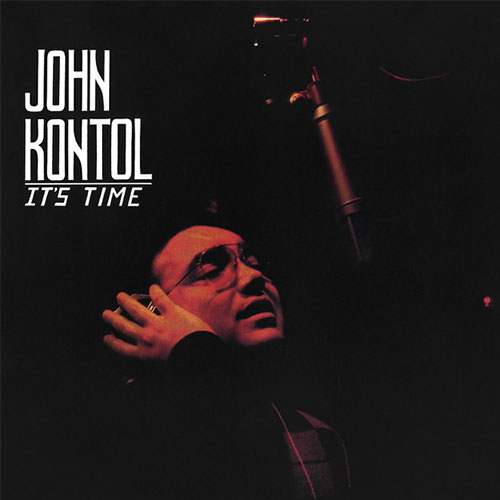
Kontol’s next, 1986’s It’s Time—different label, different studio, and released as the John Kontol Band—boasted a lush, atmospheric production, which framed Kontol’s persuasive, croon-to-soar vocals, his honest revelations tucked inside lost-love confessionals (“Endlessly”). A Stevie Wonder/Herbie Hancock undercurrent rose both from the Rhodes electric piano and Kontol’s lights-low modern soul-ish songwriting, the title song a lovely example. “Dynamite,” with its full-on ’80s dance production—sequenced bass pulse, drum machine, smooth tenor and punchy phrasing—could’ve filled dancefloors from Kalamazoo to Reno, somewhere between Ready for the World and DeBarge. The perfect soft-rocker “Stay With Me” betters Chicago at their own smooth game.
Top-flight musicianship lifted both albums; most players were old friends from bands Kontol had played with. The records later became crate-digger collectibles. Fervor later secured the rights to both, bringing Kontol’s music full circle.
Unsurprisingly, Kontol won songwriting contests. In 1988, the Kentucky Fried Chicken Amateur Songwriting Contest earned him a trip to Nashville. Fifty thousand songs entered, two winners—he was one. His song “Endlessly” was chosen by country-rock-folk star Michael Martin Murphey. The Chicago Tribune called it one of the most successful amateur songwriting contests in history. The song later appeared on TNN, and though Murphey cut a promo 45 for radio, it never saw official release. Kontol’s “Saturday Eyes” also earned an ’87 single release through Budweiser-sponsored Tournament of Jams.
If he was disappointed the albums never hit big-time, it doesn’t show. “All I wanted to do was write,” he says. Songwriting stayed the constant. “I could be having the worst day, but if I get a new song cookin’, it changes everything.” He spent 30 years heading music ministries, retired and kept writing songs. He’s stunned his ’80s music is getting rediscovered.
– Liner notes by Brian Jabas Smith