Mark Zubia’s mariachi-musician father, Raul, tossed his kid into the fire. By 10, Mark was strumming guitar in Raul’s band, playing traditional Mexican music.
“He’d show me G-D-C on guitar, and say ‘that’s all the chords in the song. You figure out when you play the song.’” Mark laughs. “I used the same approach with Los Guys. I think they got frustrated.”
Los Guys weren’t “informal” so much as pure beer-and-weed Dazed and Confused. Here’s ever-chill Mark on the combo’s manifesto: “One rule was, let’s not have a band meeting ever. We’ll learn everything on stage.”
Quick backstory: In ’94, Mark—then in the Chimeras, soon the Pistoleros—and a gaggle of Tempe musician dudes, including storied bassist Paul “PC” Cardone, were sparking a Sunday-afternoon beer glow at Long Wong’s, launchpad for the dirt-jangle-twang “Tempe sound.” The reasonably soused Zubia, PC and a couple others wound up onstage. Mark shouted chord changes through songs they barely knew—mostly leftover Pistoleros tunes he’d written with brother Lawrence, plus “fuck-off” covers.
Wait. Some thought behind this, right? Because somehow this shambolic accidental barband stuck.
“It was the first time I sang live vocals,” Mark says. There it is.
Los Guys gave rise to a beautiful voice, a singer-songwriter who otherwise might’ve remained in his brother’s shadow. The quiet, humble-to-a-fault kid bro, who never much cared what people thought of his sound or look—even under a major label thumb with the Pistoleros—still wouldn’t see it that way. “I was just trying to work. Play music and have fun.”
Sports bars, taverns, arts centers, outdoor fests, coffee houses, backyards. Los Guys rocked packed clubs and empty rooms, from Tempe to Montana to Cancun. It became a collective built around Mark’s songs, a Phoenix institution, more than some beer-and-rent coin grab. Even the covers revealed discerning taste beyond irony, from Little Richard and Bob Wills to the Stones and Lucinda Williams.
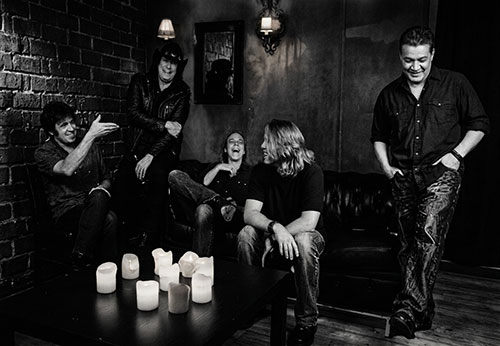
Los Guys hung tough with rotating members and mainstays, a who’s-who of Tempe music: PC, guitarists Greg Simmons, Freddie Gildersleeve, Josh Kennedy and Jim Beach, keys man Tim Rovnak, drummer Gary Smith, bassists Scott Andrews, Daryl Icard and others. The band tackled four-set nights, logged more than 2,000 gigs across 20-plus years and two albums. Alongside his Pistoleros day job with Lawrence, he kept Los Guys alive as other offshoots rose—solo stuff, the Zubia Brothers, whatever mattered (or paid).
On the band’s 2001 self-titled debut, Mark’s “Americana” intertwined with blues, pop, country, folk and rock ’n’ roll. In a way, Los Guys carried the loose, boozy spirit of the Replacements or Doug Hopkins-era Gin Blossoms, while the subtlety and soulful sadnesses surfaced in the studio.
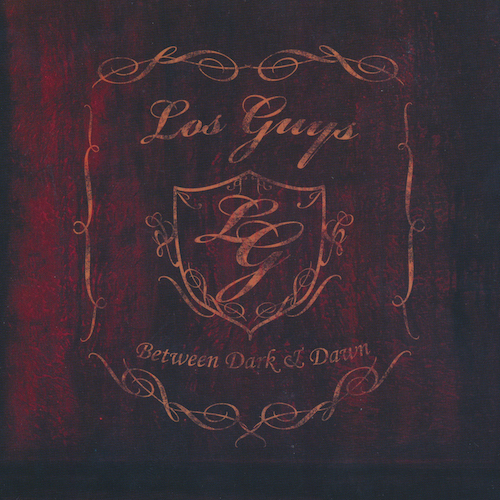
Between Dark & Dawn arrived seven years later. Lived-in, honest, an overlooked gem deserving a wide audience. It’s the sound of a guy who took on the mainstream with the Pistoleros and lost, but on his terms, he wins.
“Need You More” shows Mark’s effortless blend of folk-poet longing (“I need you more than angels need their grace”) and bittersweet pop hooks. A Zubia brothers’ co-write “Down the Line” aches like good Warren Zevon (seriously), while “Out of My Mind” floats on regret, Mark’s confessional lines drifting toward the POV of the tragically broken Lawrence. “What I Lost” is a beautiful Doug Hopkins song Doug never wrote. A lightning-mouthed harp drives the honky-tonk hoedown “Whiskey Song.”
Secret weapon Tim Rovnak frames Mark’s brokenhearted introspection with piano and organ, especially on his two co-writes, “Apology” and opener “Who’s Got a Secret.” Closing tear-in-beer ballad “Ain’t Been Here” sidesteps country-song maudlin with the deeper, truer sorrow outlaw greats like Merle Haggard and George Jones taught so well, tempered by pedal-steel maestro John Rickard’s languid melody. Elsewhere, Gin Blossom Jesse Valenzuela lends a hand.
On the spiritual, emotional and physical wear of playing rock ’n’ roll for a living, Zebu quotes the Band’s Richard Manuel from The Last Waltz: “I just want to break even.”
– Liner notes by Brian Jabas Smith