
Born to a Mexican-American family and a mariachi musician father, the Zubia brothers made a formidable team. But when guitarist/songwriter Mark stepped from the looming shadow of his frontman brother Lawrence, his songwriting and singing revealed an entire world of sensibility and sensitivity. Away from the blood bond, away from his magnetic brother’s orbit, Mark became himself. Childhood roles and birth order must’ve played into it—the push-pull between leadership (older brother Lawrence) and vulnerability (Mark).
In person, Mark is as quiet, humble and kind as they come. Corkscrew hair, his carriage, his grin—it all fits. Even his face is heart-shaped. Yet there’s this unmistakable sense of something smoldering beneath the surface. It doesn’t reveal itself in conversation. It reveals itself in melody, lyric and song.
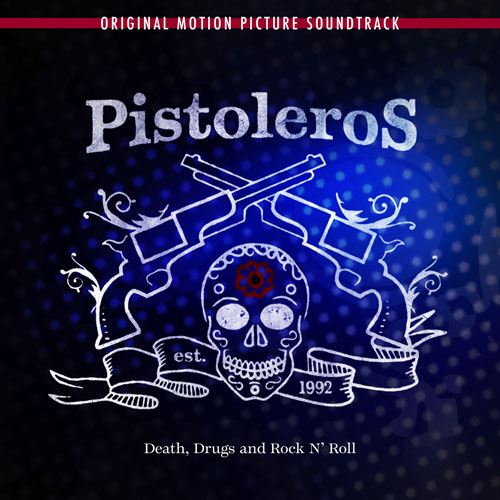
His songs often brim with a gentle sadness, and a kind of hard-won barstool insight of a thoughtful observer who has, for better or worse, played a million gigs in taverns, dives and saloons, beginning with Live Nudes and the Chimeras, then the on-again-off-again Pistoleros, Los Guys and the Zubia Brothers.
Mark’s storytelling cues echo the greats, Haggard, Waylon, Townes Van Zandt, and even the mariachi music the brothers grew up playing with their father. Taken together, Mark’s solo work—a debut album and two later EPs—offers a lovely lens into broken hearts, broken promises, loss and survival. Mark’s chesty, resonant voice rises to any challenge, and by the EP releases, he could sing a univariate spreadsheet and somebody somewhere would still be moved enough to cry. All his solo releases are exquisitely executed and produced, built on classic songwriting tropes, vocal and lyrical hooks, and ambient layers of pedal steel, organ, keyboards, violins and even horns.
There’s a timelessness to Mark’s work. It sounds old, it sounds new, and often simultaneously melancholy and comforting. Even the countrified rock ’n’ rollers show Mark’s subtle power from within.
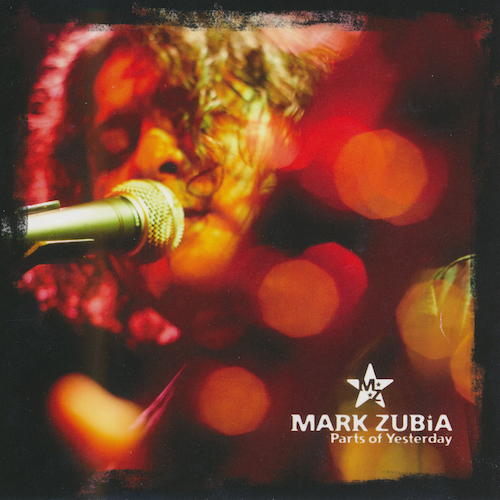
The brothers penned the title track for Mark’s ’06 album “Parts of Yesterday” and in Mark’s hands you’d be hard-pressed to find as beautiful a pop song anywhere. (The song was reimagined later by the Pistoleros.) The stunner “With a Brother’s Love” foreshadows Lawrence’s death (pneumonia and pancreatitis), while detailing their uneasy, messy connection: “Save for me your last breath/Coming close to where it ends/A brother’s love/Will start again.” Self-deprecation flies free on the fun blues-romp “Bar Star.”
Even in the days leading up to Lawrence’s passing in 2020, the brothers, as close as two siblings could possibly be, were still at odds. They’d grown up together, written together, lived together, shared stages for decades, survived a gifted bandmate’s suicide, one becoming a father, the other an uncle. Years of Lawrence’s addiction, and later bruising disputes over publishing, had put Mark through hell. “I’m going to carry that guy home the rest of my life,” Mark says in 2026.
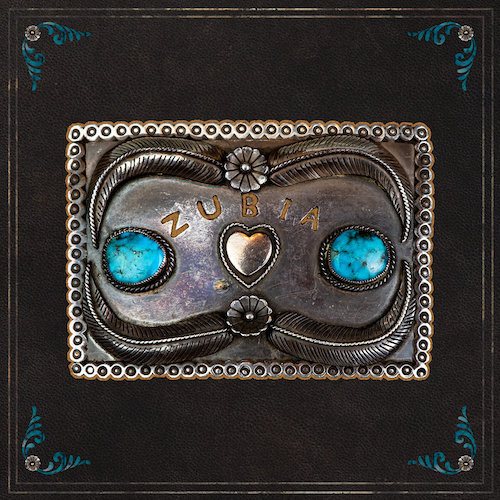
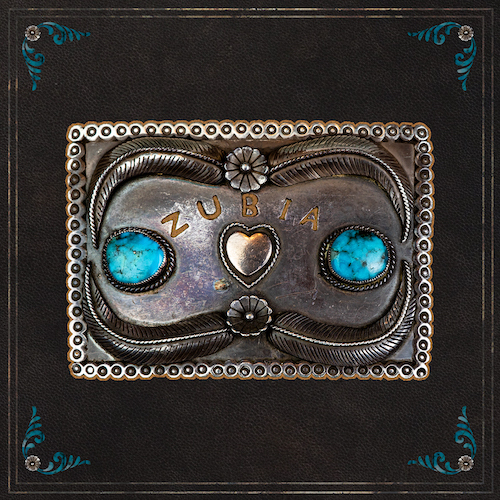
When Lawrence died, Mark was recording 2021’s more cinematic sounding EP “Zubia.” “That record wasn’t done and there were some angry songs on there at my brother,” he says. “Like ‘Bleed,’ really mean songs, ‘Fight or Flight.’ I was just devastated.” Angry or not, those songs add dimensions of weight and sympathy to an EP already filled with splendor and moody western pop. (“Carry You Home” carries a slight Lord Huron breeziness while spare strings and group-swell harmonies balance Mark’s lilting rasp.)
“I’ve written as many songs about my brother as I have about any of my romantic partners,” Mark says. A moment passes, and he says, quietly, “I was really fucked up after my brother died.”
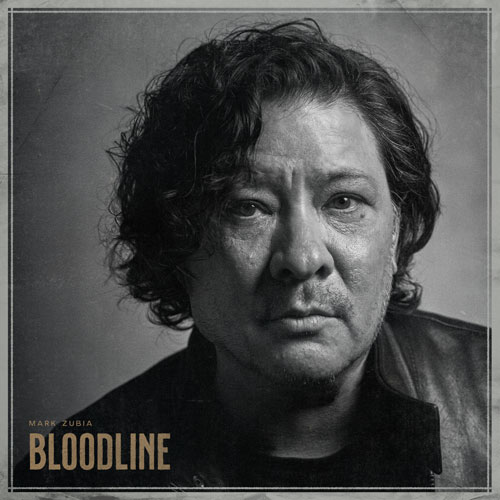
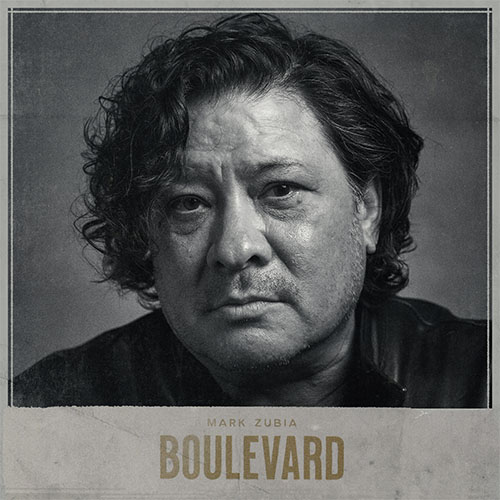
For Mark’s ’24 EP Bloodline, he and Lawrence had written “Too Soon, Too Far” and “Green-Eyed Girl” when they were teens. The former is classic (and grown-up sounding) country while the latter drones like some nighttime journey into the safe recesses of post-pubescent nostalgia. The songs add layers of poignancy. The brothers were working on “You Don’t Like Me” when Lawrence died and it took a few years for Mark to return and finish it. No wonder, it’s an unironic heartbreaker. Elsewhere, the moody, cosmic-cowboy strutter “Boulevard” would rule Nashville in an alternate universe, and “Breakin’ My Heart” is a straight tear-in-beer country rouser. The soothing heartbeat rhythm of “Chains” tenderly recalls the Meat Puppets’ Chris Kirkwood taking a bullet at a Phoenix post office. The song’s empathy keeps it free from overwrought outlaw myth-making.
Mark Zubia writes with uncommon humanity. That he remains terminally underrated is a loss for the world.
– Liner notes by Brian Jabas Smith